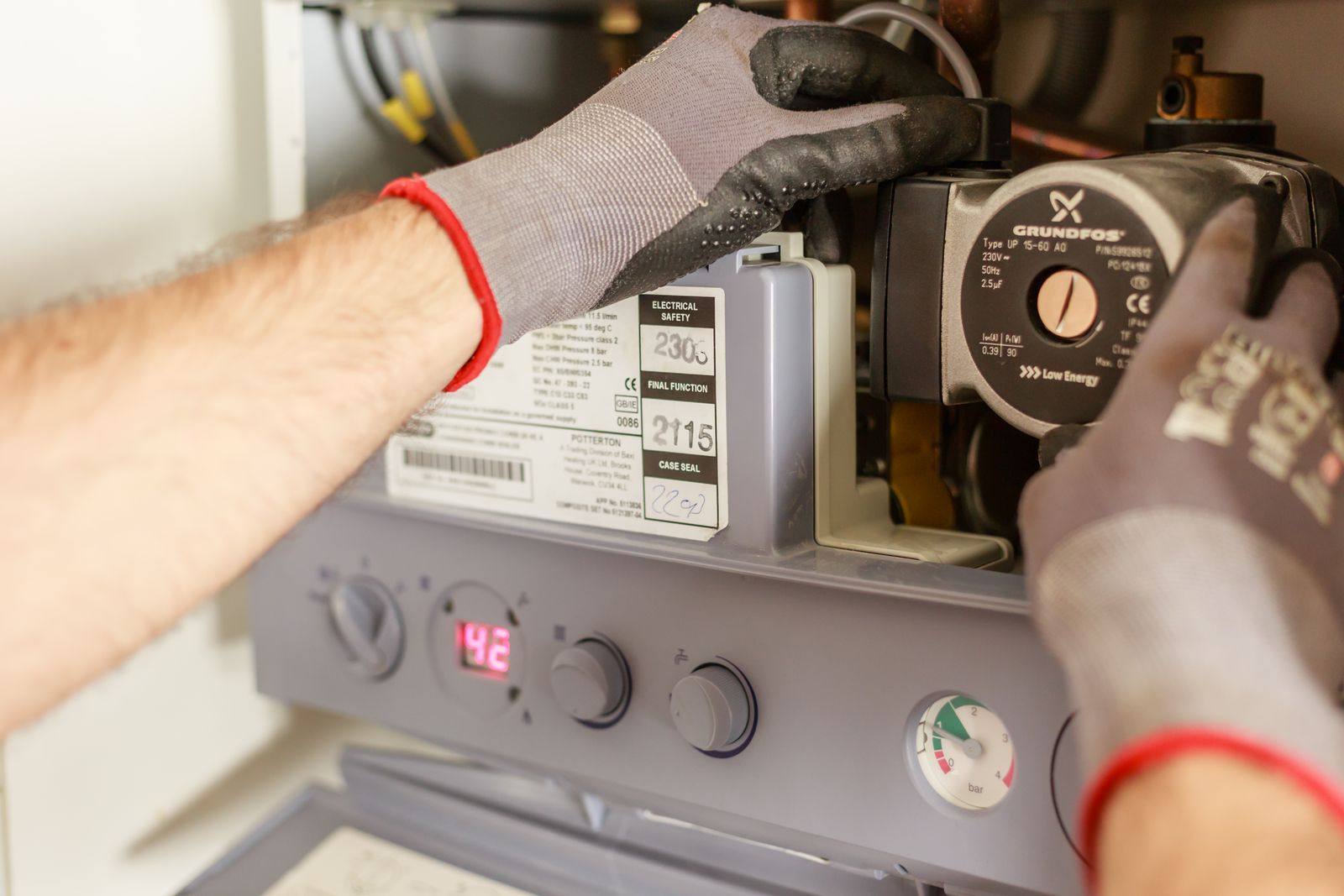
Replacing a water heater in Spokane
A water heater replacement is one of those jobs that looks simple from the outside and is not. The unit itself is the easy part. The decisions that matter are the size, the type, the venting and gas or electrical supply, and the local rules — and in Spokane the local conditions shape all four.
Spokane's water comes from the Spokane Valley–Rathdrum Prairie Aquifer, and it is mineral-rich — the city's own well readings vary widely, from moderately hard to hard, depending on the well. That mineral load settles as sediment in tanks and scale on tankless heat exchangers, and it builds faster when the heater is working hardest in winter.
Spokane winters are cold — temperatures often drop below zero, and cold snaps can last for days. Inlet water arrives near freezing, so a heater has to raise the water temperature much further than in a mild climate, and any heater or pipe in an unheated garage or crawl space is at freeze risk.
When replacement is the right call
- - The tank leaks. A leak from the tank body cannot be repaired reliably. Patching buys days, not years.
- - The heater is 10–12 years old and needs a major part. A gas valve or a control board on an old tank is money spent on a heater that is already past its expected life.
- - Repairs keep repeating. Two or three repairs in a year usually cost more than the remaining life of the heater is worth.
- - The household has outgrown the tank. A family that has added a bathroom or a soaking tub needs a larger tank or a tankless unit, not another repair on the old one.
When repair is the better call
A heater under about eight years old with a single failed part — a thermostat, element, thermocouple, or relief valve — is usually worth repairing. So is a heater whose only problem is sediment that can still be flushed out. A provider who recommends replacement for a five-year-old heater with a bad thermostat is selling, not advising.
What a replacement involves
The old unit is drained and removed, and the new one is set in place, connected to the water, gas or electric supply, and venting, then tested. In Spokane, a replacement quote should include the permit where one is required, disposal of the old unit, and any venting or gas-line work the new unit needs. Local firms advertise tank installs in roughly the $1,500–$3,000 range; that is an advertised range, not a quote — the actual price depends on the unit, the installation conditions, and what else has to change.
Choosing the size and type
A tank is sized by gallons and by recovery rate — how fast it reheats. A household of two can live with a 40-gallon tank; a household of five usually cannot. A tankless unit is sized by flow rate at the local winter inlet temperature, not by the headline number on the box. The provider who responds to your request should ask about the number of bathrooms, the number of people, and whether you run the dishwasher and the shower at the same time — if they do not ask, the sizing is a guess.
Frequently Asked Questions
How long does a replacement take?
Most straightforward tank swaps take a few hours. A change of type — tank to tankless, or electric to gas — takes longer, because the venting, gas line, or electrical supply changes too.
Do I need a permit for a water heater replacement in Spokane?
Many jurisdictions require a permit and inspection for a water heater replacement. The provider handling the work can confirm what applies at your address.
Should I switch to tankless when I replace?
It depends on the household and the water. The tankless page covers sizing, descaling, and when tankless is worth it in Spokane.
Which areas do you cover?
Spokane and the other cities on the service area page — 46 ZIP codes in total.