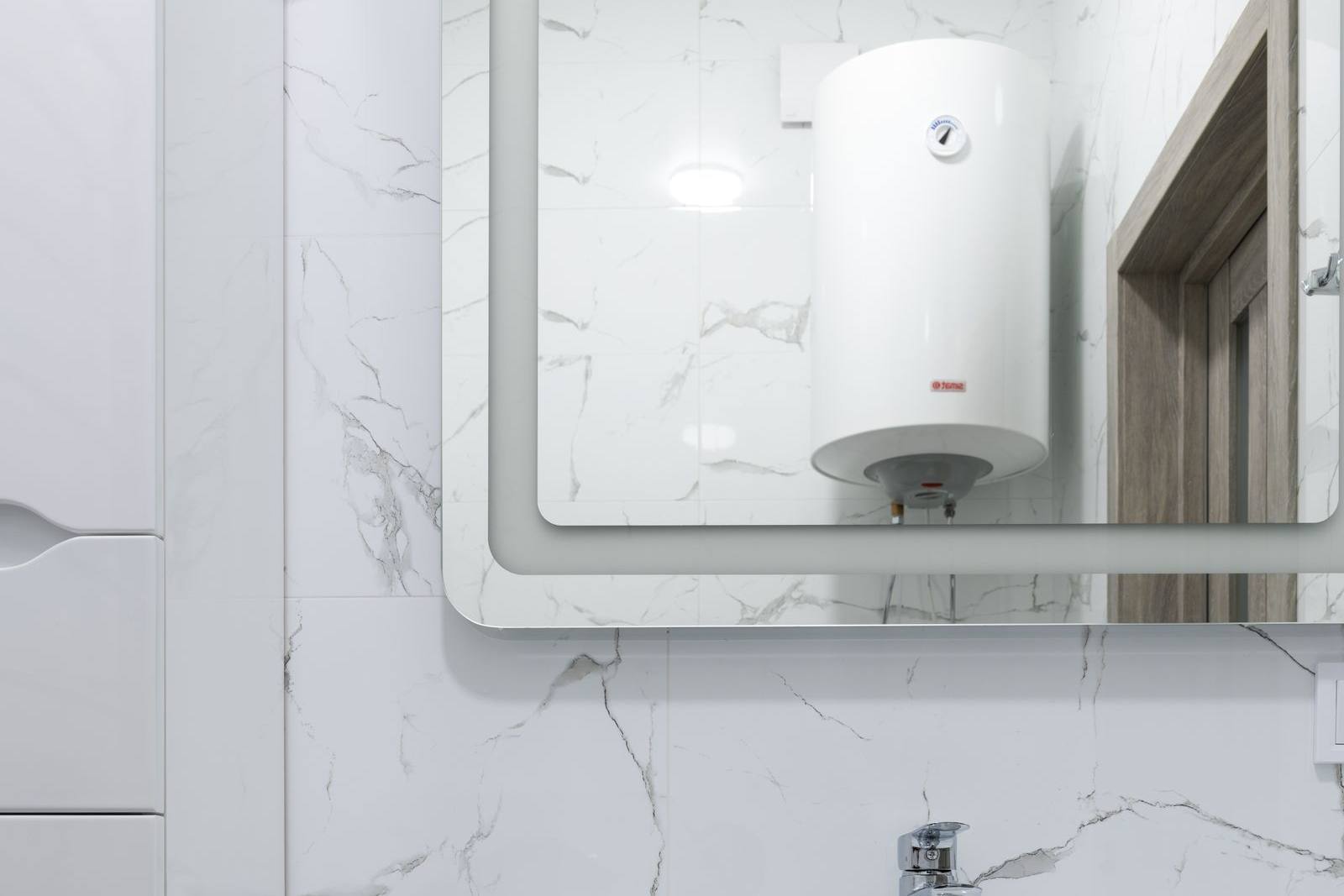
Tankless water heaters in Spokane
A tankless heater does not store hot water — it heats water as it flows through, so hot water does not run out the way a tank can. That is the appeal, and it is real. The trade-off is that a tankless unit is more sensitive to the local water and climate than a tank is, and in Spokane those two things matter more than most buyers expect.
Spokane's water comes from the Spokane Valley–Rathdrum Prairie Aquifer, and it is mineral-rich — the city's own well readings vary widely, from moderately hard to hard, depending on the well. That mineral load settles as sediment in tanks and scale on tankless heat exchangers, and it builds faster when the heater is working hardest in winter.
Spokane winters are cold — temperatures often drop below zero, and cold snaps can last for days. Inlet water arrives near freezing, so a heater has to raise the water temperature much further than in a mild climate, and any heater or pipe in an unheated garage or crawl space is at freeze risk.
What tankless is good for here
Tankless suits homes that run out of hot water with a tank — large families, homes with several bathrooms used at once, and homes where the tank is undersized for the household. It also suits homes short on space: a tankless unit mounts on a wall and frees the floor space a 40- or 50-gallon tank takes up. For homes in Spokane with a single bathroom and a working tank, the case for switching is weaker, and a good provider will say so.
Sizing is the part that goes wrong
A tankless heater is sized by flow rate and by the temperature rise it must deliver — the difference between the incoming cold water and the 120°F or so you want at the tap. In Spokane, that rise is larger in winter than in summer, because inlet water arrives colder. A unit sized for summer conditions will underperform in January. The right question to ask a provider is not the brand but the flow rate at your winter inlet temperature, for the number of fixtures you run at once.
Descaling is not optional
In hard-water areas, a tankless heat exchanger scales up faster than a tank does, because the water flashes to a high temperature across a compact exchanger. Manufacturers generally recommend descaling once a year; in the hardest water that interval can be shorter. A tankless unit that has never been descaled will lose flow, throw error codes, and eventually fail early. Annual maintenance — flushing and descaling — is part of the cost of owning one here. See the maintenance page for what a tune-up includes.
Repair or replace?
- - Repair is usually right for a single fault — an ignition failure, a sensor, a flow problem, or a scaled exchanger that can still be descaled.
- - Replacement is usually right when the heat exchanger is heavily scaled or cracked, when parts are no longer available, or when the unit was undersized from the start and has never kept up.
Frequently Asked Questions
Is tankless worth it in Spokane?
It depends on the household and the water. Large households that run out of hot water benefit most. Homes with hard water need to budget for annual descaling — without it, the savings disappear into repairs.
How long does a tankless heater last?
Tankless units often last 15–20 years, but only with regular descaling where the water is hard. Without maintenance, scale shortens that considerably.
Can a tankless unit replace my tank directly?
Usually yes, but the gas line, venting, and electrical supply may need upgrading — a tankless unit draws far more gas or power at full flow than a tank does. The provider who responds to your request can assess what your home needs.
Which areas do you cover?
Spokane and the other cities on the service area page — 46 ZIP codes in total.